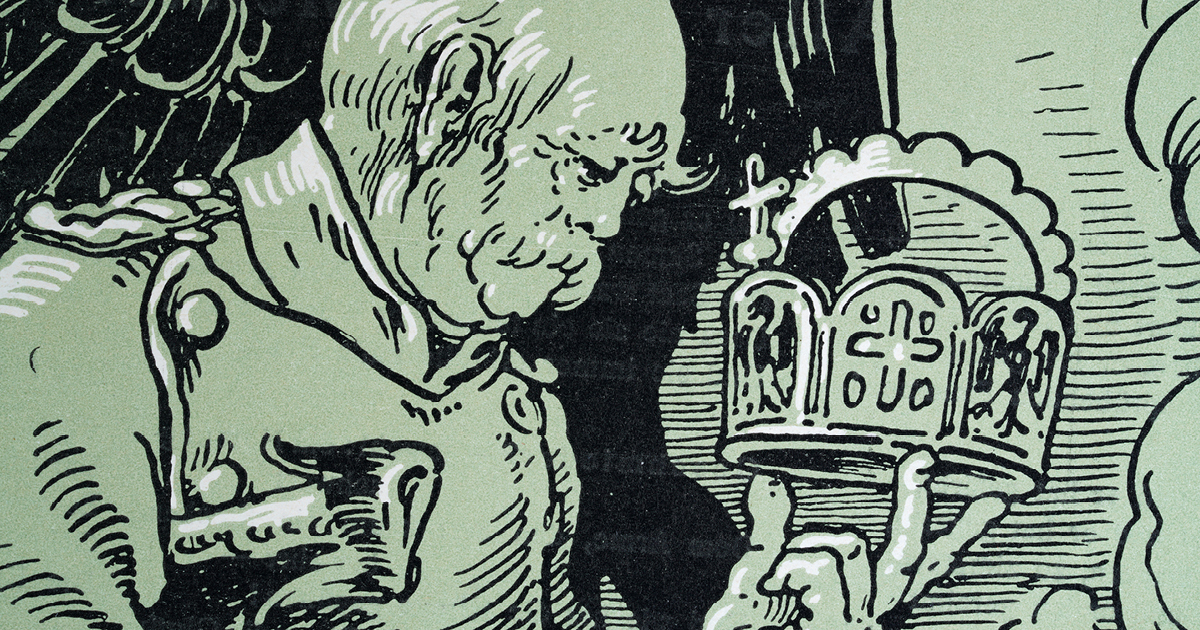
The New York Times recently ran an interesting article about a purported resurgence of Christianity. The story concluded that while the steady decline of Christianity over the last 40 years seems to have slowed, any "resurgence" is as much a reflection of its prevalence in social media posts than actual bodies in churches — though, to be clear, even an arresting of the decline is a trend worth noting.
What I find more interesting, as someone that takes his faith rather seriously, is why the “resurgence” at all? What has changed?
I have written much about the search for power that threads through humanity's time on this planet. It is part of who we are. For around the same 40 years that church-going has been declining, people across most spectrums of life have been feeling their power slowly ebbing. The reasons are not a mystery. The price of moving from being a country of skilled workers and a large, comfortable middle class to being a country of consumers of goods made elsewhere, with an ever-shriveling middle class has, for many, translated into a feeling of impotence — a loss of power. Rather like a black hole in space, this loss, for many, might only be seen by the effect it has.
People crave power and agency over their lives, yet forces as large as offshoring and as small as automated phone trees that keep you from a human, ever chip away at it. When power is denied to people, they will find it — often in the darkest of places. Many of the issues that we work on: substance use, loneliness, suicide, begin with people treading the moribund road from being powerless to hopeless and beyond. And, along that road, run up a tally of self-consuming costs paid in trying to regain a feeling of power. Power that was once delivered internally, through identity and work, is often sought to be replaced externally through what we do to others and how we feel about them.
Into this gap steps a new form of “muscular” Christianity, tailor-made to offer a quick and ordained injection of exactly the kind of power that people are seeking.
Its attraction should not be a surprise. The driving message underpinning the whole of Jesus’ teaching is Love —and forgiveness, and humility. In our media-driven, narcissistic age, this can be a very difficult message to hear and inculcate. As Paul repeatedly presents in scripture, “I am weak, it is Christ that is strong in me.” That is unlikely to be the message that is bringing people back to “Christianity." Finding power in forgiveness and self-abnegation is much harder to understand and much less sexy than power found through opposition, force and destruction. That feels like power. That the numbers show that most of the new converts are young males, while a historically strong demographic for Christianity, young women, are increasingly moving away from the religion, underscores the changing nature of how each group sees themselves and how they fit (or not) inside the church.
Bending Christianity to justify one’s own beliefs is not new. For a couple of centuries, people worked hard to argue that not only was slavery not a sin, but that it was in line with God's word. What I find particularly puzzling today is the peculiar idea that God would need anyone’s help to do His job. As I have said to church groups over the years, I do not imagine that the day would come when God wakes up in the morning and says, “Oh my Me, I sure hope Dixon comes through for me today or else I am screwed.” The lesson for Christians to learn there is that He does not need us; we need Him. But in this muscular Christianity, there is an undercurrent that God indeed needs you — needs you to act in martial and powerful ways. To fight someone on His behalf. However, if you believe that God, “the creator of the universe,” needs you, you are essentially saying that you are His equal, or perhaps greater. That is a rather explosive proposition.
This same machinery — the manufacturing of power through opposition — is not limited to religion. As I wrote previously, in my essay Labelmaker, labels allow massive manipulation in the direction of emotions. By throwing a lasso around a group of people and applying positive or negative connotations, you can maneuver their behavior and/or behavior toward them. “Patriot” has gone from a word that almost anyone in the US would have defined the same way and been proud to claim, to one that applies comfortably now to only about half the country — with behavior associated with it looked upon very differently depending on one's perspective. Similarly, the word “liberal” has gone from a political description (the US is, factually, a liberal democracy) to a demonizing insult — for some.
Populist, globalist, activist, mainstream, nationalist, traditional — all shifting, all being claimed or weaponized. It is a sign of how Americans are encouraged to see each other as diametrically opposed enemies, with social media algorithms ever throwing gasoline on a fire that they largely sparked and vigorously fan.
What is easily missed and yet sits at the crux of the labeling is this: if I tie my identity to being, for example, a patriot, then whoever controls the definition of a patriot's behavior controls me. If I tie my identity to being a progressive, then whosoever is steering the definition is, in turn, steering me. I just returned from doing research in Anadarko, OK and was reminded how much loyalty and cruelty exists around clothing brands in middle-school — which is to say, this behaviour is stoked early. The price of our labels is often, unwittingly, our independence of thought and personality. We risk becoming robots to the strictures of the label.
The same mechanism shows up in drug policy, and nowhere more clearly right now than with kratom, an emerging threat in prevention work that we’ve been closely engaged with for some time. I was thinking about this while speaking with a concerned parent (and friend).
In its natural form, kratom is a leaf used for centuries in parts of Asia — a mild stimulant in small doses; a sedative in larger ones. That’s not what’s driving concern in the U.S. The issue is products sold as “kratom” that have been engineered to concentrate one compound: 7-hydroxymitragynine, or 7-OH — a far more potent opioid.
When that compound is artificially boosted, what’s being sold isn’t meaningfully the same as the leaf. It’s an opioid, carried under the label of a “natural supplement,” and sold in gas stations and smoke shops.
The parent I spoke with wants all kratom banned, including the natural leaf. There’s logic there — the body does convert another milder component of kratom into 7-OH (in very small amounts). But banning the leaf outright runs into a simple truth: millions have used it traditionally for generations. The leaf and the engineered product are not the same thing. And calls for outright bans often provoke stronger pushback, sometimes with unintended and undesirable results.
What matters is the manipulation — the concentration of a powerful drug behind the cover of a benign label. “Natural,” after all, is not a safeguard. Arsenic and death-cap mushrooms are also “natural.”
Such benign terminology exists because of a loophole which allows some dangerously incomplete and inaccurate labeling. A law championed by now-retired Senator Orrin Hatch sharply limited the FDA’s ability to regulate supplements, creating a gap wide enough for products like this to pass through. Every year, many people — including many children — die because of that chasm between labels. Sadly, no one has stepped up to properly close the supplement loophole.
There’s a question I always ask anyone that we are going to work with: what do you want to happen because of what we do together? Inside an honest answer to that question, labels tend to fall away. Outcomes don’t care what we call ourselves.
If you label yourself a Christian but your outcomes drift toward hate and conflict, it’s worth a second look. If you call yourself a patriot but find yourself undermining the institutions you rely on, perhaps pause for a moment. If you claim free speech but seek to shut down the speech of others, it’s worth asking what’s driving that.
The same pattern shows up closer to home: if you like to see yourself as a super-parent but instead, unwittingly, stifle the creativity, resilience and independence of your children, a course-correction may be in order. (Of course, hundreds of billions of dollars are spent discouraging that course-correction.)
Labels are not just descriptors; they are levers. And as much as we take hold of them, they take hold of us.
The question is not whether you are a Christian, a patriot, or an advocate. The question is: who do you have to become to earn and keep that label — and who benefits from that version of you?
Because when we sell our identity for borrowed power, the price is our personal independence.

If we want our kids to bully less, we should stop denying them power. (And perhaps bully each other less also).
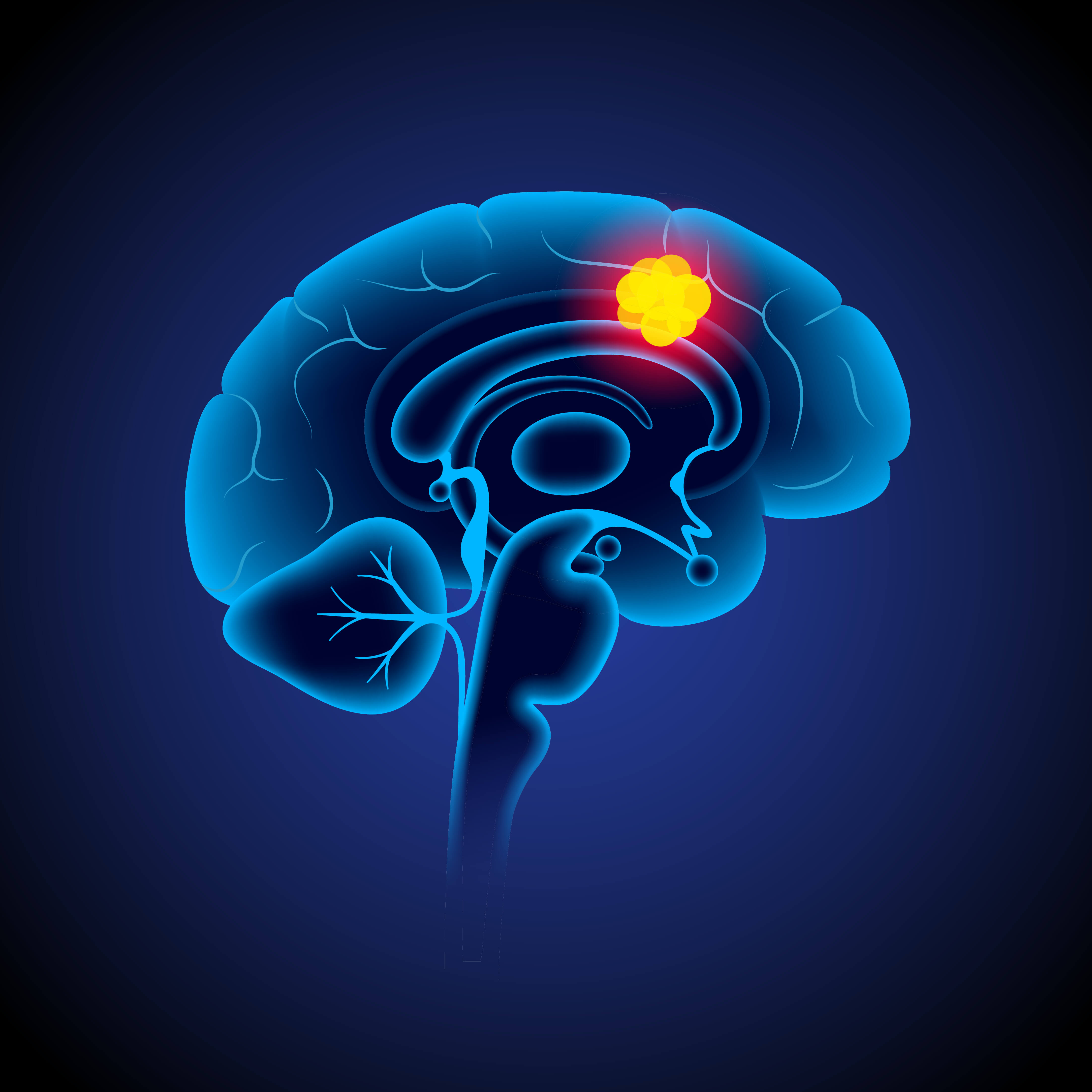
The Meta settlement is not enough. It imposes restrictions around the edges, while leaving the truly damaging core functions of Facebook and Instagram: identity manipulation, continuing largely unimpeded.
People seek to have power over their own lives. Teens, adults, older adults – everyone. What happens when they feel powerless? What happens when you or your communications make them feel they have less power?
The way we talk to others demand that they accept an identity for themselves, and sets up a particular relational dynamic. If we're not careful, that identity can be stigmatizing or turn away the very people we're trying to help.
Get the latest posts and updates delivered to your inbox.

